
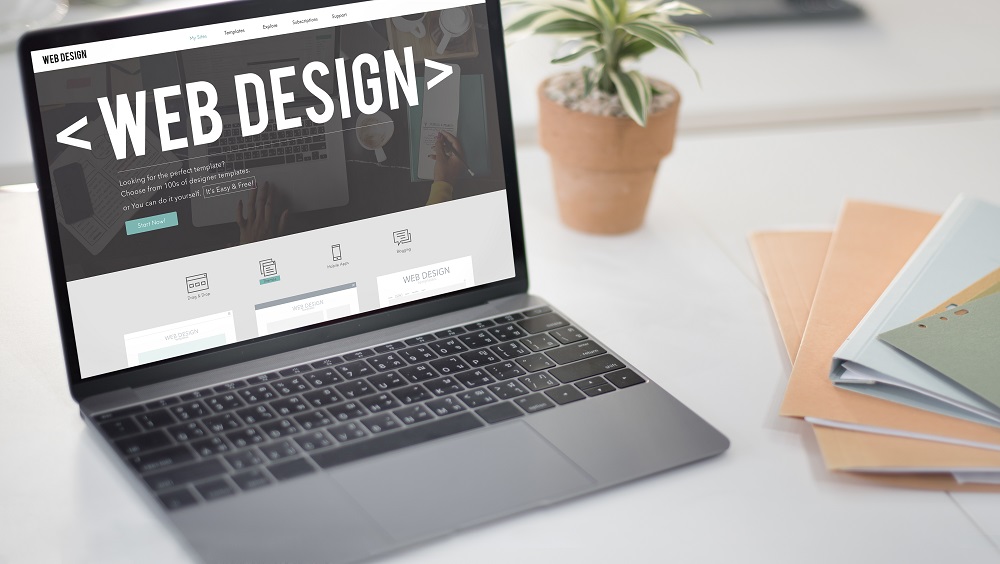
There is no doubt that website design and a complete understanding of the different features and elements required in web design is a practical skill in the digital age. For those of you that are new to the world of web design, it can essentially be compared to someone getting a natural glow up. Whether the web designer is starting from scratch or improving an existing website, the designer will likely focus on the following areas of the website:
– Layout and format of the website.
– The speed of the webpage.
– Search Engine Optimization (SEO): How Google ranks your website based on the qualities of your website.
Sounds complicated, right? That is why I will walk you through each of these details of web design step-by-step.
Design and composition of the website
The layout and formatting of your website are one of the most important things you need to consider. According to experts, you have as little as 8 seconds to hook your visitor. Yes, that’s right – 8 SECONDS! When someone visits your website, they will note the look (the layout and format of your website) and the texture (how easy it is to navigate). Another term for the sense of your website is user experience (UX).
So, what is UX?
The International Organization for Standardization defines UX as “as a person’s perceptions and responses resulting from the use or anticipated use of a product, system or service”. When we apply this to web design, the user perceives your website and decides to engage with your website or end their session.
Website design
Many things need to be analyzed when it comes to determining the layout of your website. For example, the use of fonts and headings. The content on your website should enable visitors to scan it.
The speed of the webpage
This leads us on nicely to the next part of website design, the speed of your webpage. If you add too many images to your website, or if the pictures are too large, this can affect your website’s loading time. The speed of your website is an essential part to consider. Why is this? If your website has a slow load time, this can affect how Google ranks your website on the search engine results page (SERP). You can test the speed of your website using Pingdom Tools, GT Matrix, Page Speed Insight. Input your URL into the search bar, and these page speed tester will provide the following results: load time in seconds, performance grade, page size and requests. Why don’t you give it a go and tell us how quick your website is in the comments!
SEO
Next, we have search engine optimization, also known as SEO, as we have previously learned. Both the layout and speed of your website impact how Google ranks your website on the SERP. This being said, what can you do to ensure your website design is SEO-friendly?
Check out our simple tips:
1) Don’t overload your website with images! Select Some value-adding graphics that will contribute to your visitor taking that desired action on your website. Too many photos will cause your website to load slowly, and as a result, Google will lower your website on the SERP.
2) When creating graphics or images for your website, download them as a JPEG. The alternative format is PNG, but images downloaded as PNG have a larger file size.
Do you need support designing your website?
Do you feel frightened by the prospect of designing and optimizing your website? You are not alone! Website design can be an incredibly complex activity to get right; that is why it is often best left to professional website designers and developers. If you need support with your website, please hire me on Fiverr or Upwork.
I am a Freelancer specialize in website design and development. I work closely with clients across multiple industries to create fully integrated websites that deliver maximum satisfaction and easy navigation for website visitors.
Do you still need some trustworthy? Please don’t take my word for it; view our client testimonials here, and see how I helped design their websites! You can view these here.